
Liquid Gold Enterprise 331-272-GOLD (331) 272-4653 · call or text

Services

Six surfaces. Three systems. One crew.

Liquid Gold coats far more than garage floors. Anything that can be prepped and is structurally sound can carry a coating — concrete, plywood, old tile counters, block walls. Below is what each surface involves, the prep it needs, and the system that usually suits it. Every one of them finishes in a gloss or matte sheen, with or without texture, chosen around foot traffic and residential or commercial use. Final specification always comes from the on-site walk.

Surfaces

What we pour, and what it takes.

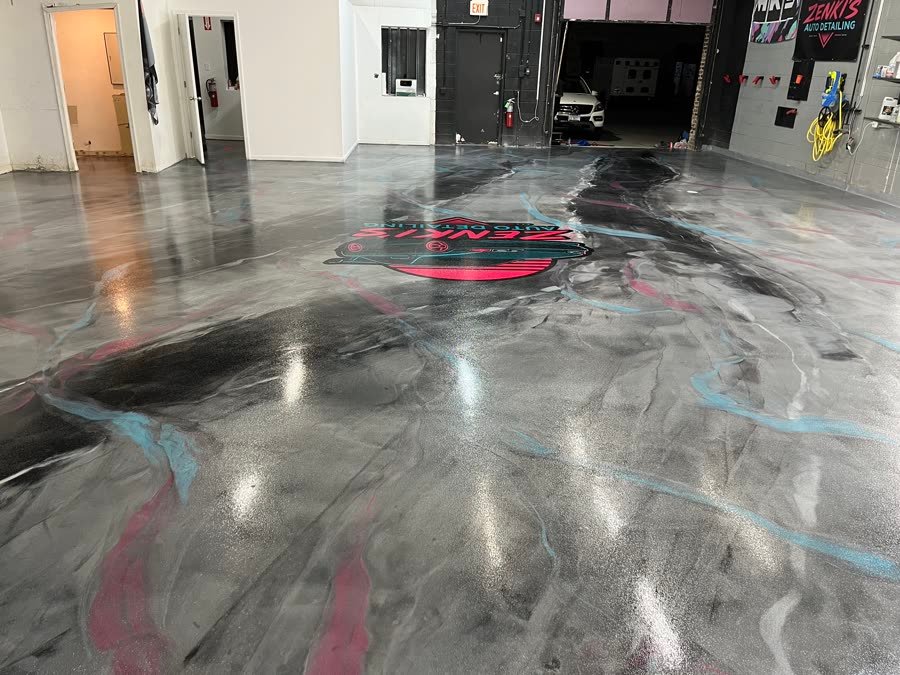
Finished metallic epoxy floor in a commercial space

Floors — garage, basement, warehouse, showroom, commercial

The bulk of the work. Residential garages and basements that need to stop shedding dust and start being washable; warehouse and production floors that take pallet jacks, forklifts and wash-downs; showrooms and retail buildouts where the floor is part of the look. Layout matters as much as the coating — aisles, bays, wash zones and thresholds all get talked through before anything is mixed.

  • PrepDiamond grind to open the slab, chase and fill cracks, repair spalls, patch or re-cut control joints, moisture test before coating.
  • Usual systemCommercial broadcast for work floors, decorative flake and quartz for garages and basements, metallic for showrooms and feature areas.
  • DowntimeMost single-bay to two-car spaces are a one- to two-day pour with light foot traffic the following day. Large commercial floors get phased so the space keeps running.
Countertops

A coated counter is the fast way out of dated laminate or tile without ripping out cabinets. The existing top stays put; it gets deglossed, filled and built up so the surface reads as one continuous slab with a hard, cleanable topcoat. Edges and backsplashes are wrapped so there is no visible seam where the coating stops.

  • PrepSand or grind the existing top, fill grout lines and chips, seal the substrate, mask cabinets and appliances, tape a clean edge line.
  • Usual systemMetallic for stone-look movement; solid-color with a satin topcoat when the room wants something quieter.
  • DowntimePlan on the kitchen being out of service for a few days — light use returns before full chemical cure, which is confirmed on site.
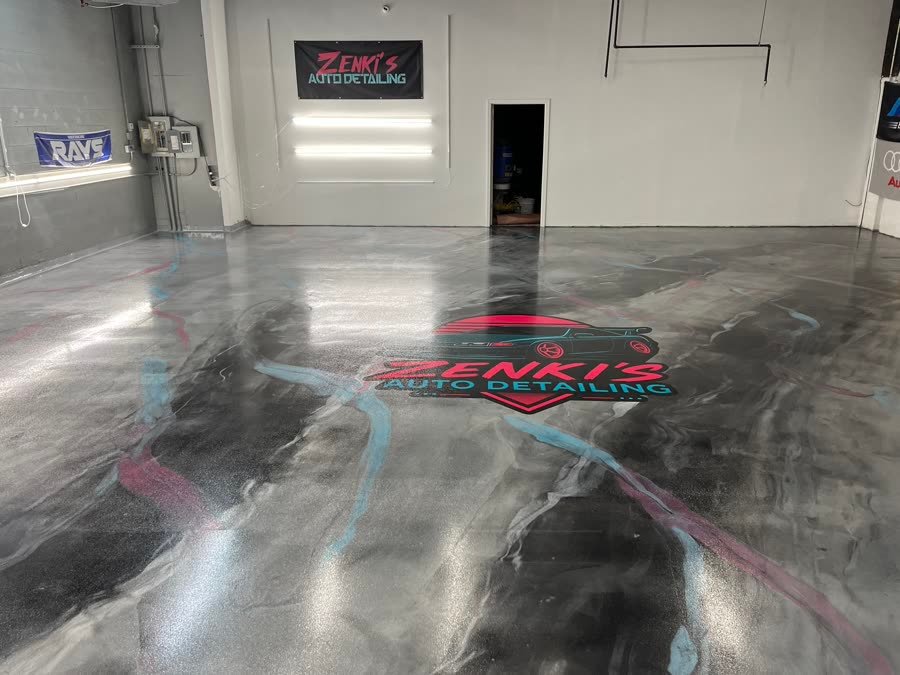
Metallic epoxy pour with a custom logo inlay

Bar tops

Home bars, basement builds and commercial taprooms. This is where the deep pour and a thick gloss topcoat earn their keep — a bar top gets wet, gets glasses slid across it and gets looked at from twelve inches away, so surface flatness and edge work are the whole game. Embedded items and logo inlays are common here.

  • PrepLevel and stabilize the substrate, seal end grain and seams, build a dam at the edges, warm the room so the pour flows and de-gasses properly.
  • Usual systemMetallic or clear deep-pour with a gloss topcoat. Inlays and embeds are set before the final coat.
  • DowntimeDeep pours cure slower than floors by design. Expect several days before service use; exact timing is confirmed on site.

Stairs

Basement, garage and exterior stairs. Two things drive the spec: grip and edge durability. Nosings take the most abuse of any surface in a building, so they get built up and rounded rather than left as a thin film that chips off. Traction is dialed in with flake or a broadcast additive instead of a slick clear coat.

  • PrepGrind treads and risers, rebuild broken nosings, fill voids at the stringer, mask walls and railings.
  • Usual systemDecorative flake or quartz broadcast for traction. Solid-color risers with textured treads is a common combination.
  • DowntimeStairs are usually poured in halves or over two visits so the flight stays usable. Confirmed on site.

Patios & exterior concrete

Patios, porches, walkways and pool surrounds. Exterior work lives or dies on the weather window and on respecting what the slab does through an Illinois winter — freeze-thaw movement, ground moisture pushing up from underneath, and UV. That means UV-stable topcoats, texture for wet traction, and honest talk about which slabs are good candidates and which need repair first.

  • PrepGrind or shot-blast, repair cracks and honor existing movement joints, moisture and slope check, verify drainage away from the structure.
  • Usual systemTextured flake or quartz broadcast under a UV-stable polyaspartic topcoat, so the surface does not yellow in full sun. Metallic is normally kept indoors, so ask us before planning one outside.
  • DowntimeNeeds a dry stretch with moderate temperatures — jobs get scheduled around the forecast, and rain pushes the date rather than the pour.

Walls

Block and concrete walls in shops, warehouses, wash bays and commercial kitchens, plus feature walls where the metallic look continues off the floor. A coated wall cleans like a countertop instead of soaking up grime, which is why wash-down areas and food spaces ask for it. Cove base at the wall-to-floor joint is available so there is no dirt-catching corner.

  • PrepClean and degrease, fill block voids, patch damage, prime porous masonry so the finish coat lays even.
  • Usual systemSolid-color with a satin or semi-gloss topcoat for wash-down areas; metallic on feature walls.
  • DowntimeWalls usually go in alongside the floor work, so the space is only shut down once.

Coating systems

Three systems, one prep standard.

The system is chosen for how the surface gets used, not just how it should look. We will tell you when the pretty option is the wrong option. Color and finish are choices made inside a system, not separate systems with separate prices.

Decorative flake & quartz

The residential workhorse. Color chip or graded quartz broadcast into the base coat, scraped back and locked under clear. Textured, slip-resistant, and remarkably good at hiding dust and minor slab imperfections. Run it as a full flake blend, as decorative quartz, or as a straight solid color — those are finish choices inside the same system, picked from real samples on the walkthrough.

Garage · basement · stairs · patio

Metallic

Reflective pigment suspended in clear resin and moved by hand while it cures. Depth, movement and highlight patterns are created on the spot and cannot be repeated — a sample shows the palette, not the exact figure. It sits above the flake and quartz system, and where it lands depends on the condition of the concrete and the style you choose. That is why the number comes off the on-site walk instead of the phone.

Bar top · counter · showroom · feature floor

Commercial broadcast

Built in two thicknesses. The 1/16 inch single broadcast handles light forklift traffic and heavy foot traffic; the 1/8 inch double broadcast is the heavy-duty build for constant forklift work that keeps going. Either one goes down in solid color or decorative quartz, whichever suits the business, and every commercial floor gets a moisture vapor barrier primer under it to stop the bonding problems that cause delamination and to stand up to chemical exposure.

Warehouse · shop · wash bay · kitchen

  • Moisture vapor barrier epoxy Underneath every job. Concrete on grade pushes vapor up through its pores, and a standard epoxy delaminates when that vapor has nowhere to go — worst in basements. This layer is rated to hold back moisture drive that would lift a standard epoxy, so the floor lasts a lifetime.
  • Polyaspartic topcoat Over the top of every job. Polyaspartic is UV stable, so the surface does not yellow and keeps looking brand new — in a garage, out on a patio, or on a set of exterior stairs that takes sun all summer.

Custom logo inlays

Your mark, sealed under the topcoat.

The logo is cut and set into the coating, then buried under the same clear that protects the rest of the surface. It is not a sticker and not paint on top, so it wears at exactly the same rate as the floor around it. Works on shop floors, showroom entries, garage centers, office lobbies and bar tops. Send a vector file if you have one — we will advise on scale, placement and how much contrast the design needs to read from standing height.

Not sure which system fits?

Describe the space on the quote form and pick “not sure” — recommending the right build is part of the walkthrough, not an upsell.